Per anni sono stati uno degli enigmi più ostinati dell'universo primordiale: macchie compatte e rossastre, troppo luminose e troppo precoci per quadrare con le nostre teorie sulla nascita delle prime galassie. I "piccoli punti rossi" (little red dots) hanno alimentato il sospetto che qualcosa, nei modelli cosmologici, non funzionasse. Ora un'osservazione del telescopio spaziale James Webb sembra aver sciolto il nodo, e la spiegazione è tanto elegante quanto inattesa.
Un team guidato da Vasily Kokorev, dell'University of Texas at Austin, ha ottenuto lo spettro più profondo mai realizzato di uno di questi oggetti, catalogato come GLIMPSE-17775. La luce che ci raggiunge è partita a un redshift di 3,5, vale a dire circa 1,8 miliardi di anni dopo il Big Bang: una finestra sull'infanzia del cosmo.
Una lente cosmica per vedere più lontano
Per spingere lo sguardo così in profondità, gli astronomi hanno usato un trucco che solo la gravità sa offrire. L'ammasso di galassie Abell S1063, interposto sulla linea di vista, ha agito come una gigantesca lente gravitazionale, amplificando il debole segnale di GLIMPSE-17775. Così un'osservazione del James Webb di 30 ore è stata potenziata fino all'equivalente di circa 80 ore di tempo di esposizione.
Il risultato è uno spettro straordinariamente ricco, che rivela oltre 40 righe spettrali. Tutte, senza eccezioni, risultano coerenti con un'unica interpretazione.
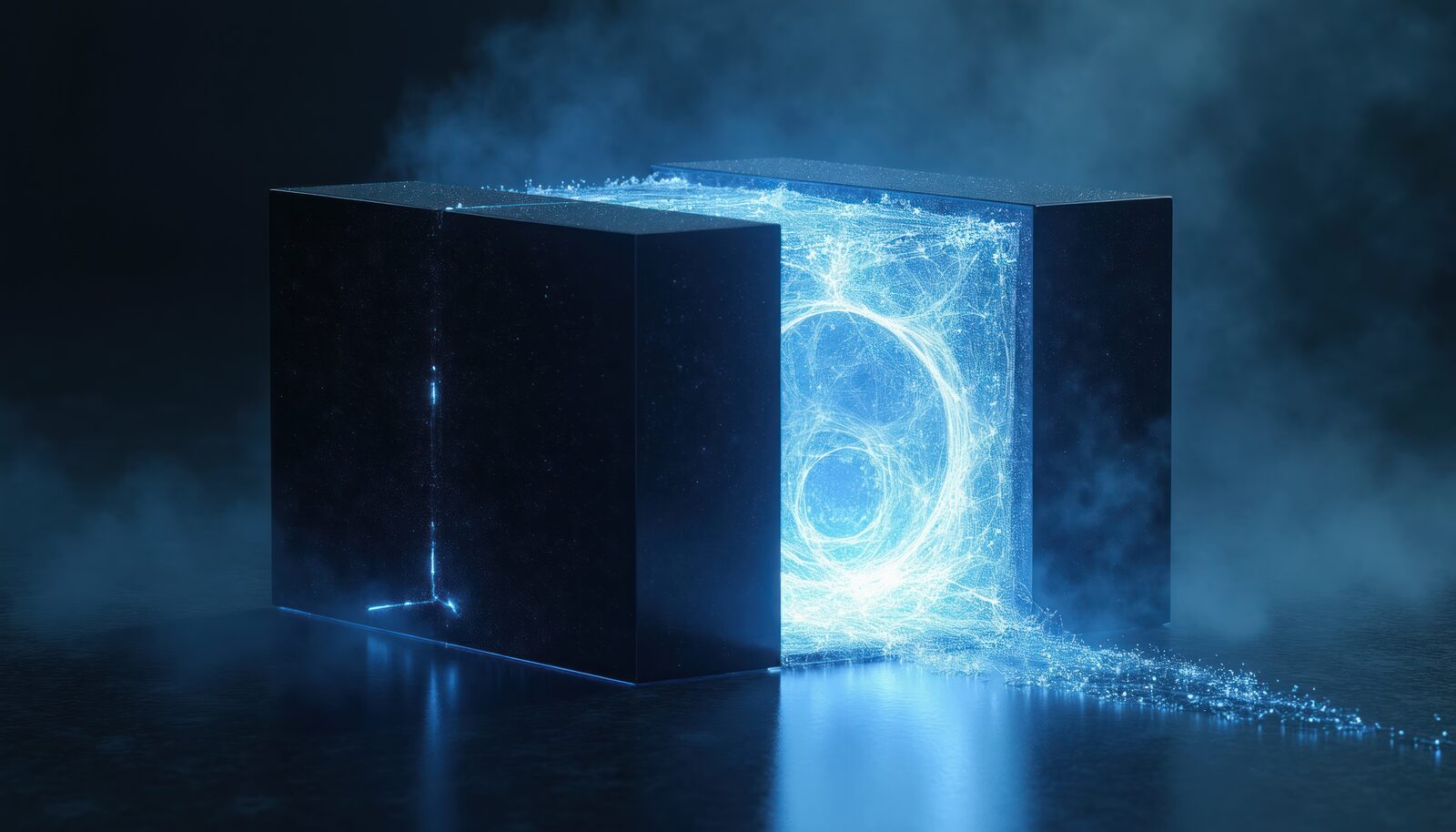
Non una galassia impossibilmente precoce, ma una "stella di buco nero": un buco nero in rapido accrescimento avvolto da un denso bozzolo di gas caldo.
La stella di buco nero
L'idea della "black hole star" descrive un buco nero in rapida crescita immerso in un denso involucro di gas incandescente, che ne maschera e ne plasma la firma luminosa. È proprio questo bozzolo a conferire all'oggetto l'aspetto rossastro e compatto che aveva tanto disorientato gli osservatori. Lo spettro di GLIMPSE-17775 costituisce la prova più completa raccolta finora per un oggetto di questa classe.
In sintesi Le righe spettrali di GLIMPSE-17775 indicano che i piccoli punti rossi non sono galassie cresciute troppo in fretta, ma buchi neri in accrescimento avvolti dal gas: un'interpretazione che li riconcilia con la cosmologia standard.
Cosmologia salva
La posta in gioco va oltre la classificazione di un singolo oggetto. Se i piccoli punti rossi fossero stati davvero galassie, la loro luminosità avrebbe imposto una crescita impossibilmente rapida delle prime strutture cosmiche, in tensione con il modello standard. Leggerli invece come stelle di buco nero scioglie la contraddizione: l'universo primordiale torna a comportarsi come la teoria prevede, senza bisogno di ipotesi straordinarie. Il James Webb, ancora una volta, non si limita a osservare più lontano. Aiuta a rimettere ordine.
For years they have been one of the most stubborn puzzles of the early universe: compact, reddish blobs, too luminous and too precocious to fit our theories about the birth of the first galaxies. The "little red dots" have fuelled the suspicion that something, in our cosmological models, was not working. Now an observation by the James Webb Space Telescope appears to have untied the knot, and the explanation is as elegant as it is unexpected.
A team led by Vasily Kokorev, of the University of Texas at Austin, has obtained the deepest spectrum ever taken of one of these objects, catalogued as GLIMPSE-17775. The light reaching us set out at a redshift of 3.5, that is roughly 1.8 billion years after the Big Bang: a window onto the infancy of the cosmos.
A cosmic lens to see farther
To push their gaze this deep, astronomers used a trick that only gravity can offer. The galaxy cluster Abell S1063, sitting along the line of sight, acted as a giant gravitational lens, amplifying the faint signal of GLIMPSE-17775. In this way a 30-hour James Webb observation was boosted to the equivalent of about 80 hours of exposure time.
The result is an extraordinarily rich spectrum, revealing more than 40 spectral lines. All of them, without exception, prove consistent with a single interpretation.
Not an impossibly precocious galaxy, but a "black hole star": a rapidly accreting black hole shrouded in a dense cocoon of hot gas.
The black hole star
The idea of the "black hole star" describes a rapidly growing black hole immersed in a dense shell of glowing gas, which masks and shapes its luminous signature. It is precisely this cocoon that gives the object the reddish, compact appearance that had so disoriented observers. The spectrum of GLIMPSE-17775 stands as the most complete evidence gathered so far for an object of this class.
In short The spectral lines of GLIMPSE-17775 indicate that the little red dots are not galaxies that grew too fast, but accreting black holes wrapped in gas: an interpretation that reconciles them with standard cosmology.
Cosmology saved
What is at stake goes beyond the classification of a single object. If the little red dots had truly been galaxies, their luminosity would have demanded an impossibly rapid growth of the first cosmic structures, in tension with the standard model. Reading them instead as black hole stars dissolves the contradiction: the early universe returns to behaving as theory predicts, with no need for extraordinary assumptions. Once again, James Webb does not merely observe farther. It helps to set things back in order.